Aramean Urbanization: From Power Vacuum to Cultural Flourishing
The collapse of the Hittite Empire in the Near East marked a decisive turning point in the regional history of the Arameans and was one of the key factors behind the political and social changes that followed. As Aramean troops recaptured key cities in northwestern Syria that had previously been besieged and controlled by the Hittites, the strategic military corridors linking Anatolia to the Near East were effectively severed. One of the most notable events of this period was the Battle of Kadesh in 1274 BCE, in which the Egyptians under Ramesses II and the Hittites fought for dominance over Syria. The battle ended without a clear victor. However, it led to a power vacuum that ultimately worked to the advantage of the Arameans in the Levant.
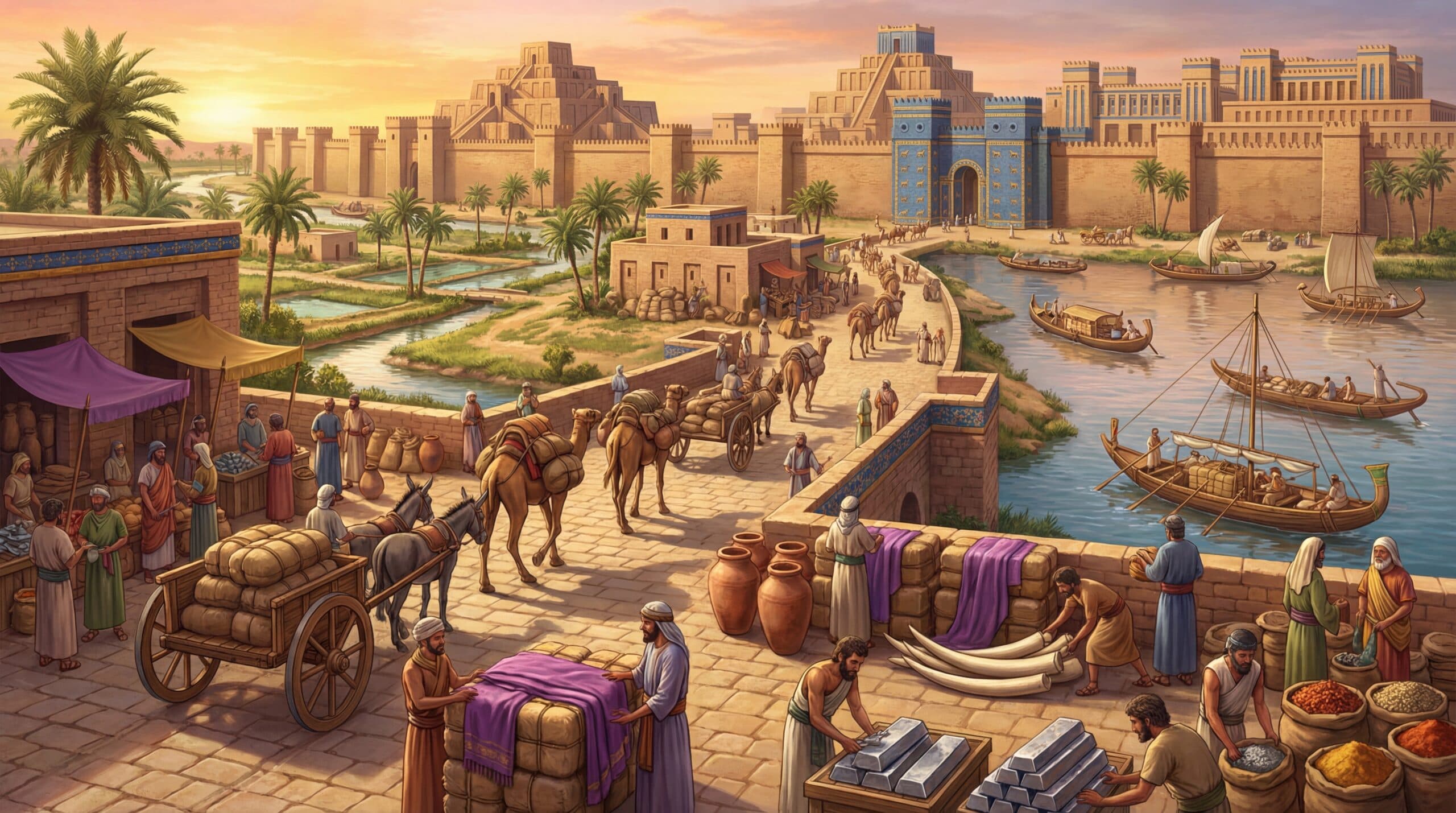
Specialized craftsmanship flourished during this time. Workshops dedicated to metalwork, textiles, ceramics, and intricate carvings produced goods that reflected a sophisticated aesthetic culture, far transcending mere utility. Archaeological evidence, such as finely detailed ivory plaques and ornate metal vessels, underscores that art and craftsmanship were cornerstones of Aramean city life.
With urbanization, new professions and a bureaucracy emerged, with scribes, officials, and administrative staff forming the core of public order. This structure enabled the cities not only to meet local needs but also to act as interconnected trading actors on a regional scale, with economic relationships extending far beyond their own walls.
The Rise of the Aramean States
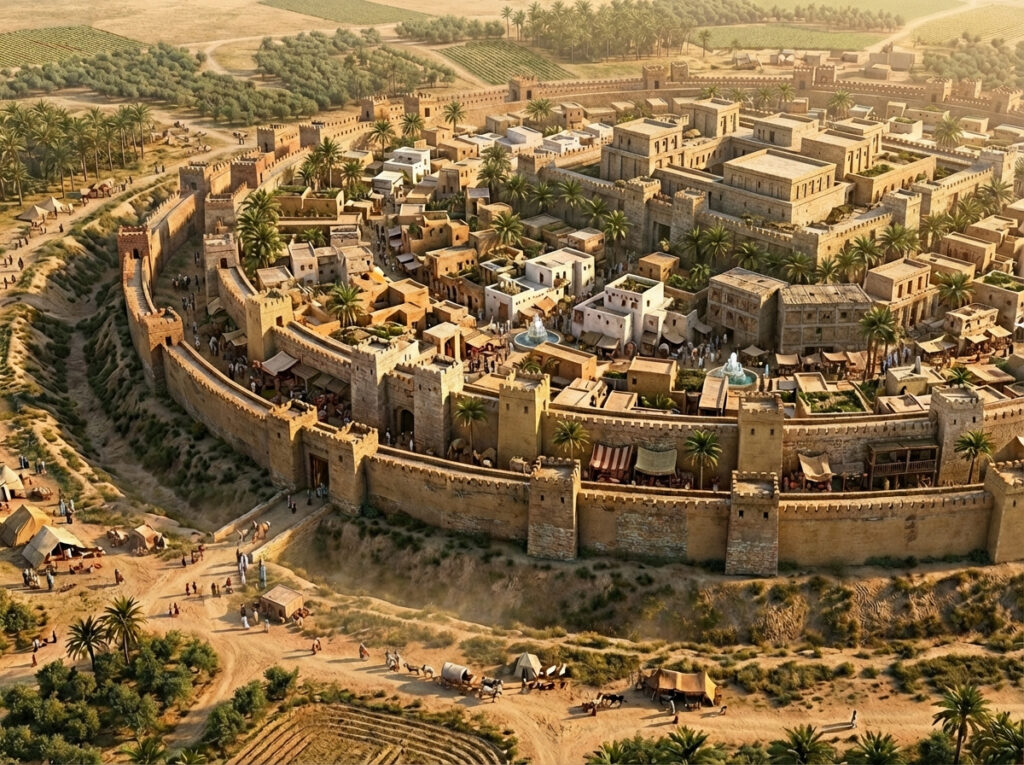
A typical Aramean city was defined by a clear and organized structure. It featured strong fortifications and a city gate that opened onto a nearby public square. Within the walls, the layout was shaped by a network of streets and various public buildings, including palaces, warehouses, and sanctuaries. These cities were also equipped with advanced systems for drainage and water supply, alongside residential areas and workshops for craft production. In addition to the major capitals of the Aramean kingdoms, there were also provincial centers and rural towns that played an important role in the region.
The major cities of the region were extensive settlements, with populations that often approached or even exceeded ten thousand people. A notable example is Tell Halaf, ancient Gozan and the capital of Bit-Bahiani, which covered 53 hectares. Based on a density of roughly 200 to 250 residents per built-up hectare, the city likely housed between 10.000 and 13.000 Aramean inhabitants. A plausible estimate for a walled city containing temples, public buildings, and squares.
The ancient city of Til-Barsip, capital of Bit-Adini, was even larger at approximately 60 hectares, with a population estimated between 12.000 and 15.000. Similarly, Magarisu in the kingdom of Bit-Yahiri (located in modern-day al-Hasakah, Syria) was significantly expanded by its Aramean builders during the 8th century BC, reaching nearly 50 hectares. Other Aramean towns typically spanned about 30 hectares, likely supporting 6.000 to 7.500 residents. One of the largest urban centers in Northern Syria was Karkemish (Carchemish), which covered more than 90 hectares and was home to roughly 20.000 people. Other key sites included the capital of Bit-Gabbari, with 37 hectares and a population of 7.500 to 9.000, and Arpad in Bit-Agusi, which covered 48 hectares and housed about 10.000 to 12.000 people. Because the Arameans established a wide network of such cities, their influence was distributed across the land rather than being confined to a single central location.
Karkemish: More than 90 hectares | approx. 20,000 inhabitants
Til-Barsip (Bit-Adini): approx. 60 hectares | 12,000 – 15,000 inhabitants
Tell Halaf (Gozan / Bit-Bahiani): 53 hectares | 10,000 – 13,000 inhabitants
Magarisu (Bit-Yahiri): nearly 50 hectares (expanded in the 8th century BC)
Arpad (Bit-Agusi): approx. 48 hectares | 10,000 – 12,000 inhabitants
Sam'al (Bit-Gabbari): 37 hectares | 7,500 – 9,000 inhabitants
Damascus (Aram): approx. 90 hectares | 21,000 - 25,000 inhabitants
Other Towns: approx. 30 hectares | 6,000 – 7,500 inhabitants
Aramean Fortress and Cities
Assyrian annals, the bronze gates of Balawat, and reliefs found in palaces across Aramean territories clearly demonstrate that cities were heavily fortified with walls and towers. For instance, the bronze reliefs from the gates of Shalmaneser III depict the city of Dabigu in Bit-Adini as being enclosed by a double wall with flanking, battlemented towers.
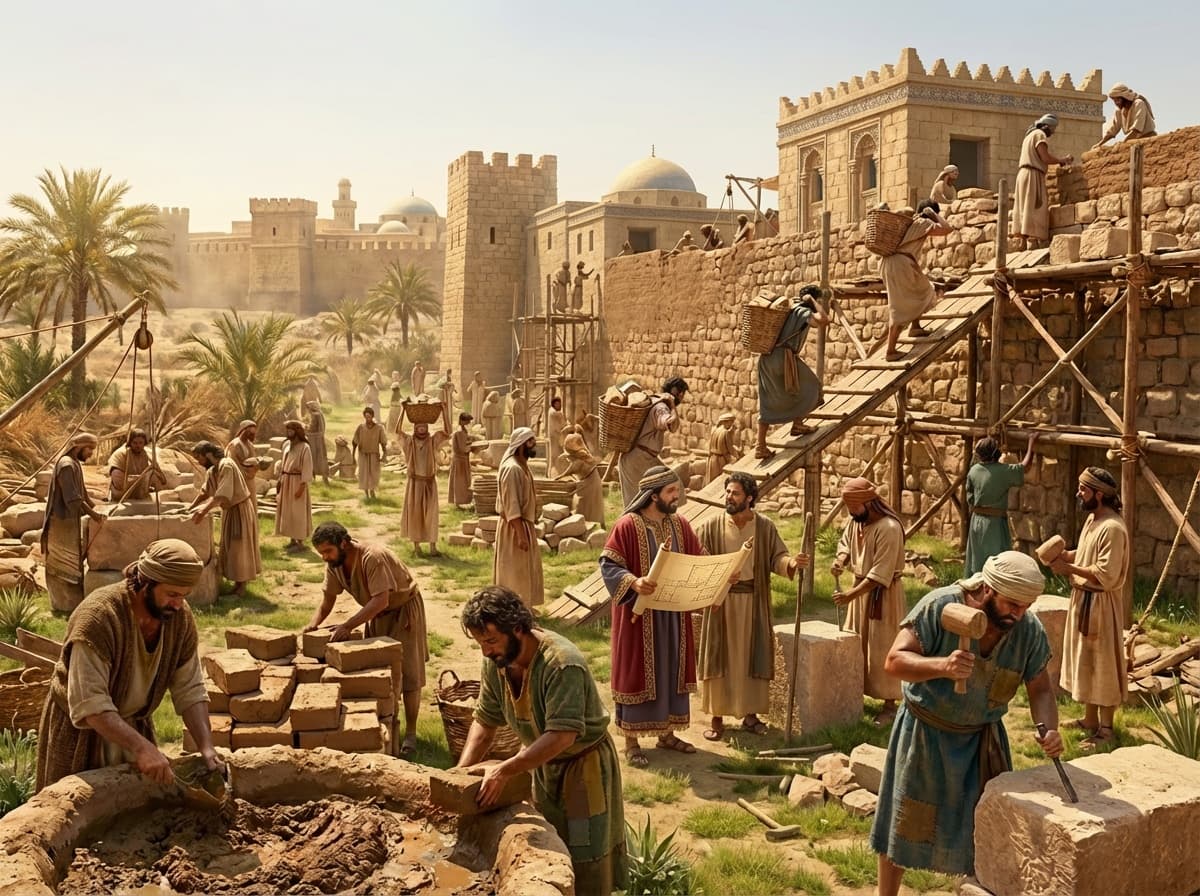
Evidence from archaeological excavations shows that Aramean city walls were primarily constructed of mud bricks & stone set upon low stone foundations. To bolster their defenses, these systems featured projecting towers as well as a citadel for added security. A central component of the fortification was the city gate, known in Aramaic as 'šaʿar'. Some sections of ancient city walls were equipped with as many as three separate gate complexes. It is important to distinguish these outer city gates from the inner gateways, which specifically regulated access to the palace precinct.
However, even these structures pale in comparison to the capital of the Kingdom of Aram-Damascus. A relief of Tiglath-Pileser III from Nimrud illustrates its immense scale: "A double city wall flanked by towers, all featuring battlements, and several internal gates. Behind these ramparts lay temples, houses, and buildings with distinct dome-shaped tower roofs." Archaeological evidence further reveals that the city was equipped with a sophisticated drainage system and a water treatment basin.
Terminology and Defensive Engineering
The Aramaic language reflects the importance of these structures through specific terminology:
- ʿŪsn’ or ʿišn’: The term for "fortress," which could also refer to a citadel or a fortified outpost.
- Qiryā: Used to denote a fortified city (in contrast to 'kapr', a "village").
- Šur: The city wall itself, which could also refer to field fortifications used during sieges.
- Ḥarīq: A wide defensive ditch or moat outside the wall that acted as a barrier against invaders.
A particularly impressive example is the palace of Gozan (Tell Halaf) from the 9th century BC. Its eastern side was protected by a massive defensive wall, fronted by a berm and a formidable moat, eight meters wide and just as deep. The outer edge of this ditch was secured by a counterscarp, likely containing a covered walkway. This allowed defenders to move almost invisibly, turning the palace into a virtually impregnable stronghold.
The Palace
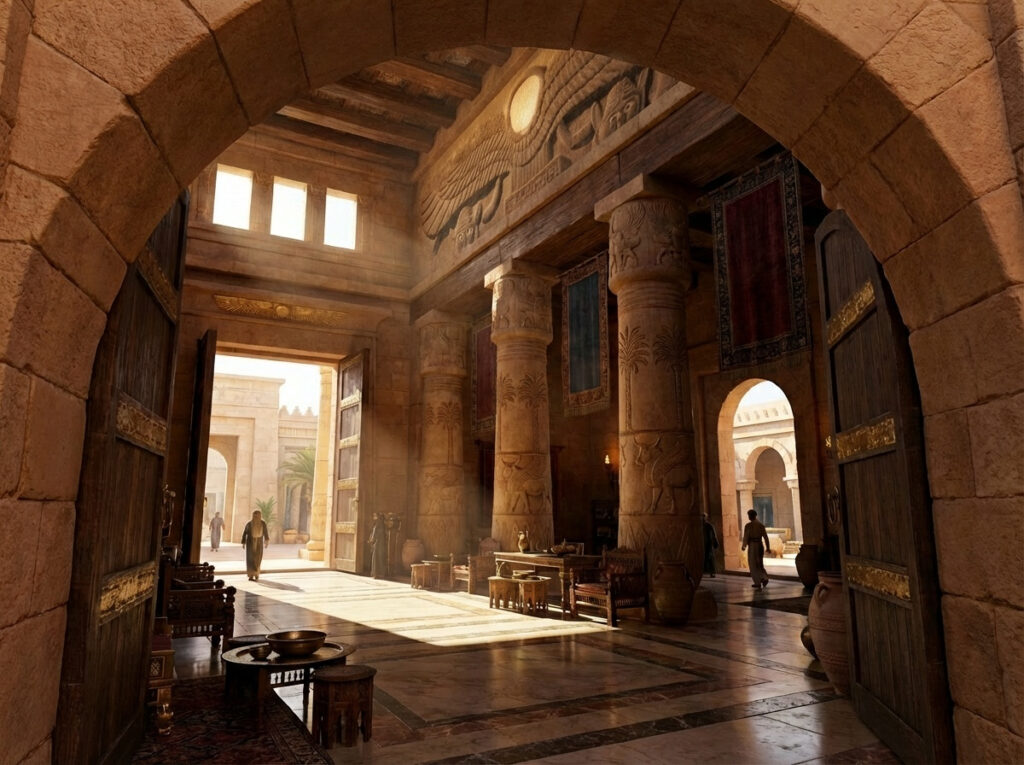
The palace, serving as both the administrative and symbolic heart of an Aramean city, was typically situated on the highest elevation of the settlement mound. From this vantage point, the rulers overlooked not only the dense rows of houses in the valley but also the surrounding fields and trade routes. Anyone ascending the hill was meant to feel the weight and presence of the seat of power.
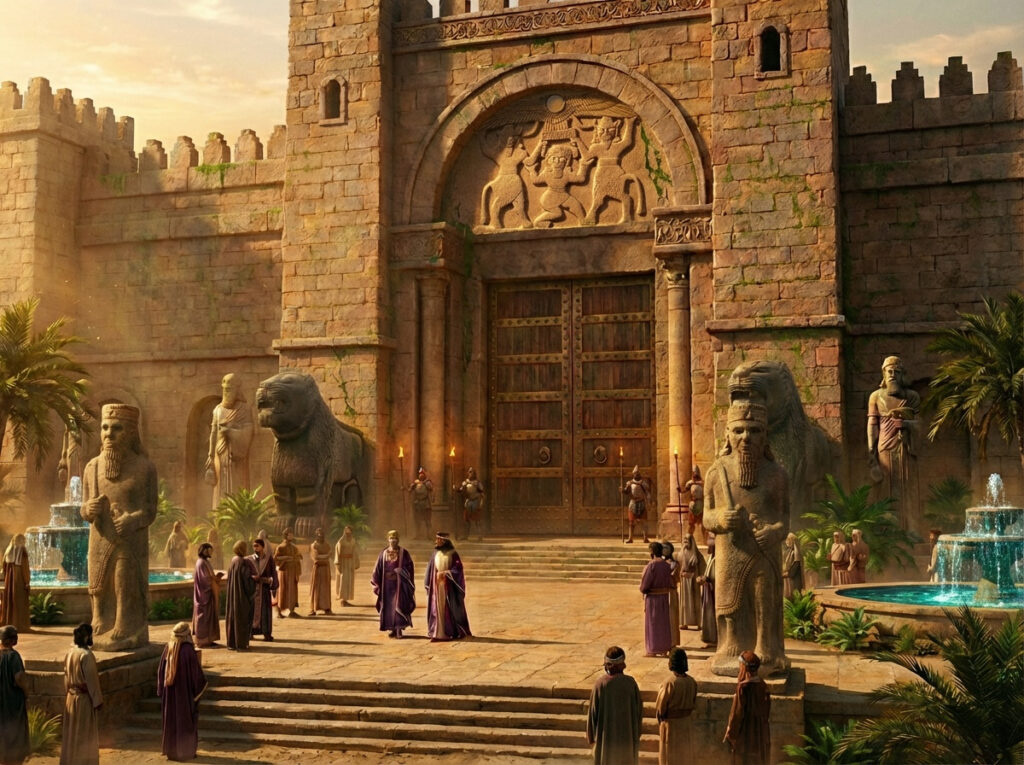
Inside the complex lay a spacious courtyard with columns, designed to both welcome and intimidate visitors. This courtyard led to the main building, known in Aramean architectural tradition as the Bīt-Ḫilāni. Rather than just a hall, this space functioned as a stage for political decisions, a venue for diplomatic encounters, and a backdrop for moments when kings ceremonially displayed their authority.
A network of public buildings expanded around the palace, with temples rising to honor the city’s gods. Large columned halls likely served as granaries and storehouses for oil and trade goods, while advanced water systems brought essential resources into the city. This was a vital achievement, as urban life in the Near Eastern climate could hardly exist without a steady water supply.
The gates themselves were far more than mere entrances; they were designed to impress and intimidate anyone who passed through. Colossal lions and eagles, carved from stone, stood guard at the gateways. These magnificent palaces embodied protection, royal authority, and the divine presence of the gods. Portal reliefs and orthostat stone slabs covered the lower walls, telling stories of rulers who founded cities, forged alliances, and defeated their enemies.The visual design of public spaces thus ensured a constant presence of political power and religious identity. In Aramean centers, administration, cult, and daily life formed a functional unity, reflected architecturally in the close integration of palace, temple, and residential areas.