The Aramean Foundation
In the Ottoman Empire, the Syriac Orthodox knew themselves as Suryānī in Arabic and Turkish, or Suryoyo in the Syriac language. These terms carried deep historical weight. Syriac literary tradition, spanning nearly two millennia, consistently identified the people as Aramean in origin. Classical Syriac authors, both of the Western (Syriac Orthodox) and Eastern (Church of the East) traditions, used the terms Suryoyo and Oromoyo (Aramean) in close association, often treating them as complementary descriptions of the same people.
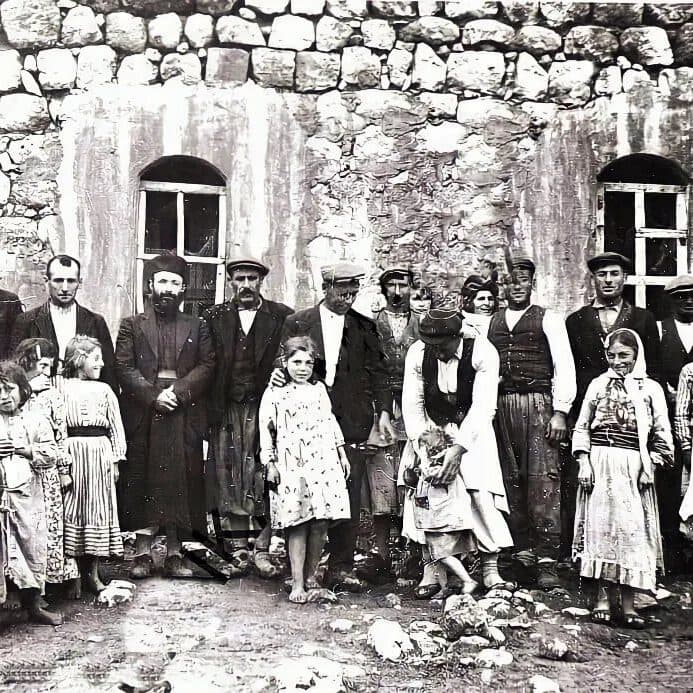
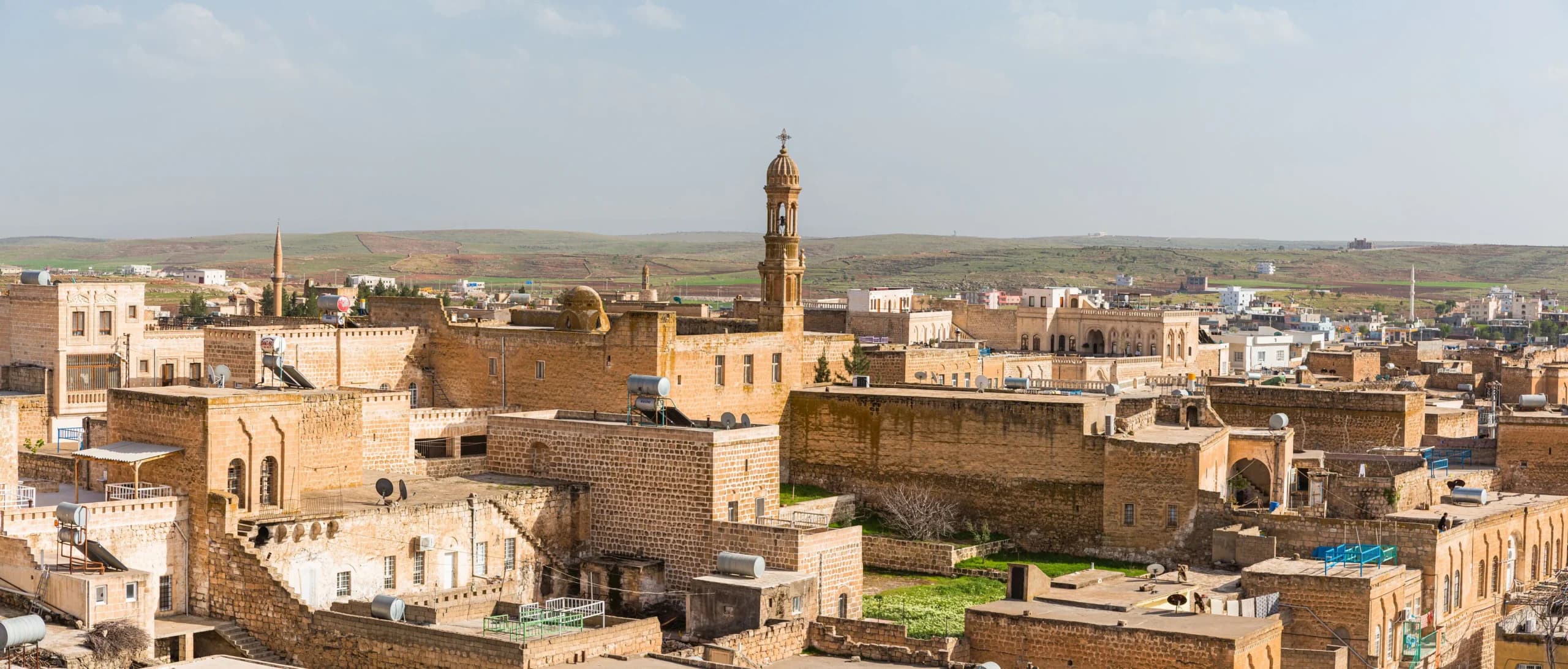
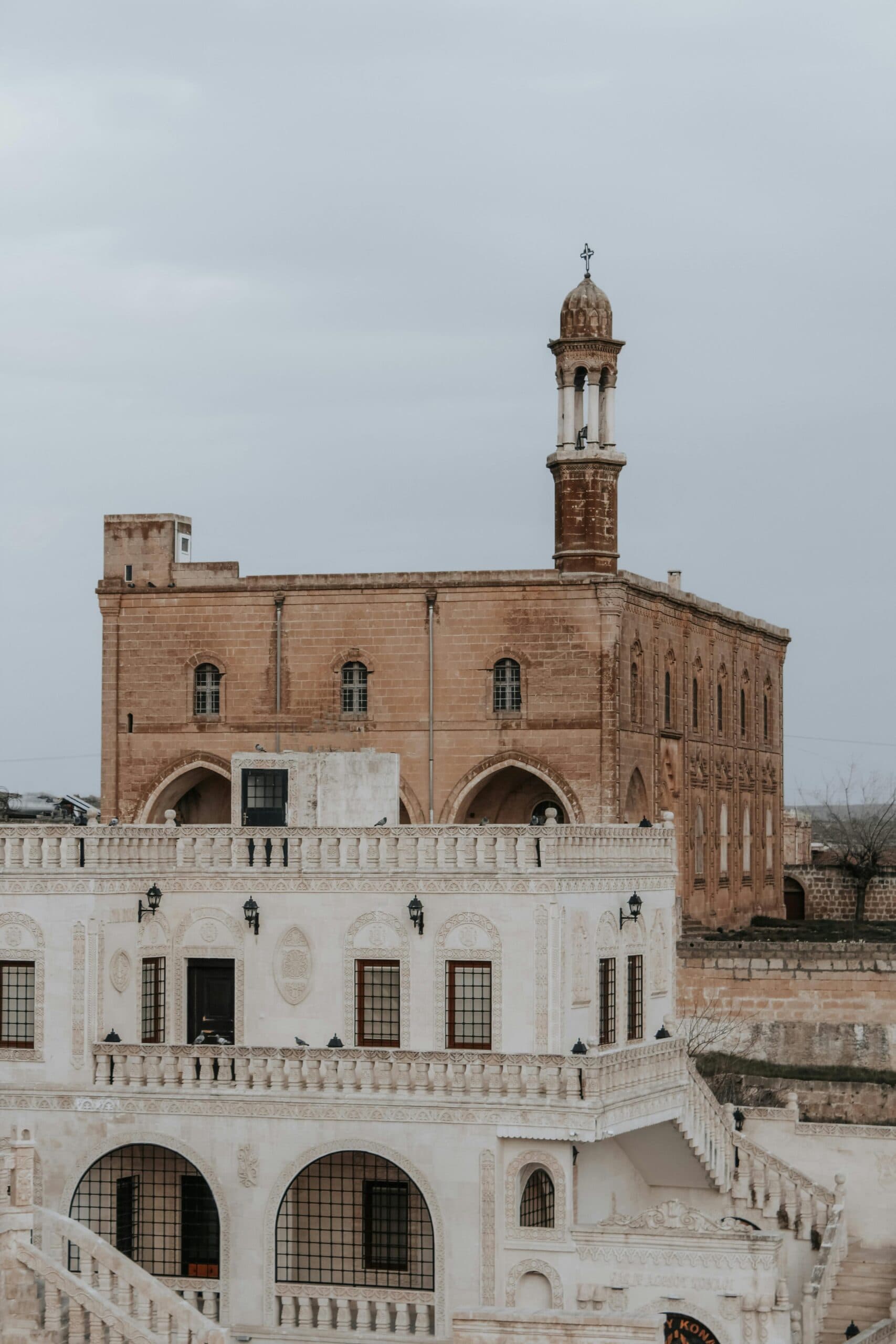
Within the Ottoman administrative system, the community belonged to the Suryānī Qadīm millet, the "Old Syriac" community. This was not merely a religious classification; it functioned as a quasi-national identity that bound together a geographically scattered and linguistically diverse population. They spoke Turoyo Aramaic in Tur Abdin, Turkish and Armenian in Kharput, Arabic around Mardin and further south, and Kurdish in many villages. Despite this remarkable diversity, they shared a common sense of belonging rooted in their Syriac Christian faith and their Aramean linguistic and cultural heritage. The church and the Patriarch held them together.
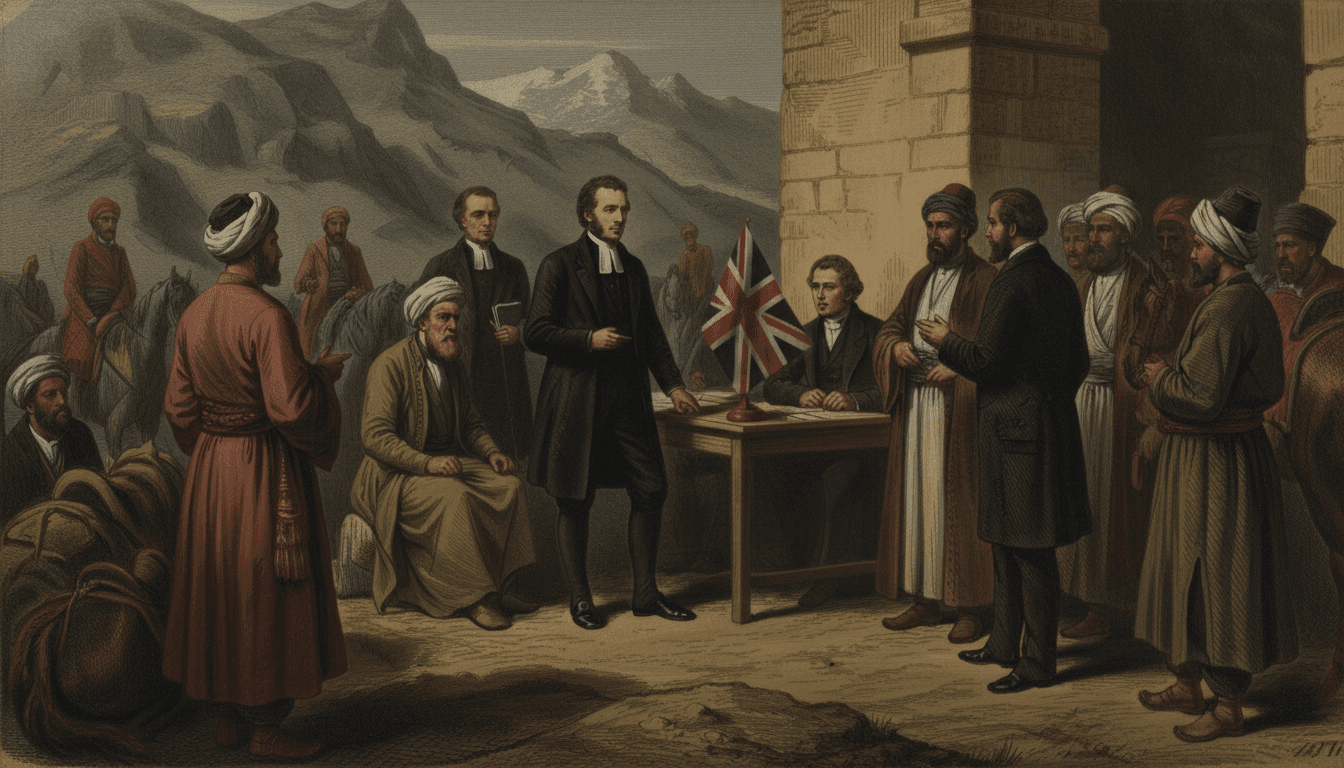
Western scholars and missionaries who encountered this community in the nineteenth century consistently used the term "Syrian" as the English equivalent of Suryoyo and Suryānī. Horatio Southgate titled his 1841 account Narrative of a Visit to the Syrian (Jacobite) Church of Mesopotamia. The Church of England established the "Syrian Patriarchate Educational Fund" in 1875. There was, in Western academic literature, no precedent whatsoever for calling this community "Assyrian."
A Misnomer Takes Root in America
When the first immigrants arrived in the United States during the 1880s and 1890s, they faced a practical challenge: they needed an English word for themselves. No written records survive of their earliest choice, but by 1910, the term "Assyrian" had appeared as the English subtitle of the Intibāh newspaper. From that point onward, English-language organizations, photograph captions, and community publications consistently used this label.
How did a community with Aramean roots come to call itself "Assyrian" in English? Several factors converged to produce this historical accident. Many of the earliest immigrants came from Kharput and Diyarbakir, where they had lived among large Armenian populations. In Armenian, the term for the Syriac Orthodox was Asouri, which sounds strikingly close to "Assyrian." Immigrants who had grown up hearing and using Asouri as a self-designation naturally gravitated toward the phonetically similar English word.
A second factor was equally important. By the time the Suryānī immigrants arrived, the English label "Syrian" had already been claimed by Arabic-speaking immigrants from what would later become Lebanon and Syria. Neighborhoods like Little Syria in lower Manhattan and parishes like the Rum Orthodox "St. George Syrian Orthodox Mission" in Worcester were already well established. For the Suryānī community, adopting "Syrian" would have caused immediate confusion with a completely different ethnic group. "Assyrian" offered a distinctive label, even though it did not accurately reflect the community's heritage.
It is worth noting that scholars of Assyrian nationalism have observed that this ideology had not yet developed at the time of the earliest immigration waves in the 1880s and 1890s, not even among the Church of the East. The choice of "Assyrian" was therefore not initially ideological. It was a pragmatic solution to a translation problem, one that happened to carry historical connotations the early immigrants may not have fully considered.
The Aramean Voice Was Never Silent
Even during the period when "Assyrian" dominated English-language usage, the Aramean identity of the community was never forgotten. It found expression in the community's own-language publications, in the writings of its most prominent intellectuals, and in the names of its organizations.
Naum Faik, widely regarded as the most important journalist and public intellectual of the early immigrant period, moved freely between "Assyrian," "Aramean," and "Syriac" in his writings, treating them as interchangeable. In a remarkable 1917 editorial in Beth Nahrin, written in Arabic, Faik referred in a single passage to "our Assyrian homeland," "its Aramean inhabitants," "we the Syriac people," "we the Arameans," "our Syriac nation," "our Aramean people," and "our Assyrian people." The Aramaean thread was woven throughout, inseparable from the community's self-understanding.
Other publications gave the Aramean identity even more explicit prominence. Sanharib Baley published a newspaper in Paterson, New Jersey, titled Savto d-Oromoye, which translates directly as "Voice of the Arameans." The newspaper Ḥuyodo ("The Union"), launched in 1921, carried an editorial reaching out to the Maronites as people "of Aramaic heritage" and declaring its purpose to "unify the thoughts of the Arameans." The editorial stated plainly that there was no difference between an Aramean of Lebanon or Syria and an Aramean of Mesopotamia or Persia except for a few theological matters.
A wartime editorial in Beth Nahrin, written in Classical Syriac, expressed the community's self-understanding with particular clarity. It described the Syriacs as being "of one race, which is the Aramean race, and from one land, which is Mesopotamia, and of one language, which is the Syriac language." The Aramean racial and linguistic identity was presented here not as one option among many, but as the foundational reality underlying the community's existence.
When news of the 1915 Sayfo reached North America through Daniel Khoury Hanna of Youngstown, Ohio, the eulogy he composed reached instinctively for Aramaic language: "Wail, O daughter of Aram. May the fog that is above you drip drops of blood. For your crown has been tainted, and your honor was stained with blood." In the deepest moment of communal grief, the Aramaean name came naturally.
Even the English-language periodical The New Beth-Nahreen, which generally used "Assyrian" as its standard label, occasionally acknowledged the ancient Arameans alongside mentions of ancient Assyria. The Aramean heritage was always part of the community's consciousness, even when the English label obscured it.
Nationalism and Its Cost to the Church
After World War I and the devastation of the Sayfo, a new generation of activists in the diaspora became consumed by a political dream: the creation of an Assyrian nation-state in Mesopotamia. Syriac Orthodox nationalists joined forces with Church of the East Assyrians to pursue this goal. At least one Syriac Orthodox community member, Dr. Abraham Yoosuf of Worcester, spent two years at the Paris Peace Conference advocating for an Assyrian homeland.
While the nationalists were building their movement, the Syriac Orthodox Church in the homeland was on the verge of collapse. The Sayfo had killed an estimated half of the entire Syriac Orthodox population. Churches had been demolished, monasteries left desolate, schools destroyed, and libraries scattered. Patriarch Elias III, desperately in need of resources to rebuild, had no one to turn to but his flock in America. But the small diaspora community was pouring its limited resources into nationalist projects that would ultimately produce nothing. In a pained 1920 letter to the North American community, Patriarch Elias wrote: "We have spent much money on useless matters. We have no more hope, and our patience has run out." The "useless matters" he referred to were the funds consumed by the nationalist dream of an Assyrian state that would never materialize.
The diversion of resources away from the church and toward nationalism during this critical period had real consequences. As the historian Khalid Dinno documented, the post-Sayfo devastation "brought the Syrian Orthodox to the verge of extinction." The Patriarch could not afford to travel to Europe to advocate for his people. Schools and orphanages went unfunded. The community's investment in a political fantasy came at the direct expense of the church's survival.
Church Hierarchy Corrects the Record
The Syriac Orthodox Church leadership recognized early on that the English label "Assyrian" was historically inaccurate. The first recorded objection came from Mor Severius Afram Barsoum, one of the most distinguished scholars in the modern history of the Syriac Orthodox Church, during his 1927 visit to North America as Apostolic Delegate. This 1927 objection to the Assyrian misnomer by the then-Archbishop (later Patriarch) disproves the Assyrian claim that he only became anti-Assyrian after the Simele massacre, in an attempt to distance his people from other atrocities. This lie is disproved by the fact that he had already objected to the "Assyrian" misnomer six years prior to the Simele massacre in 1933.
Archbishop Barsoum was thoroughly familiar with Western academic literature, which uniformly used "Syrian" or the French Syrien as the equivalent of Suryoyo and Suryānī. As a scholar, he understood that the English word "Assyrian" properly corresponded to the Syriac Othuroyo, a term that had come to be associated specifically with the Church of the East. The Syriac Orthodox were Suryoye, not Othuroye. The conflation of these two distinct terms was, in his view, a factual error.
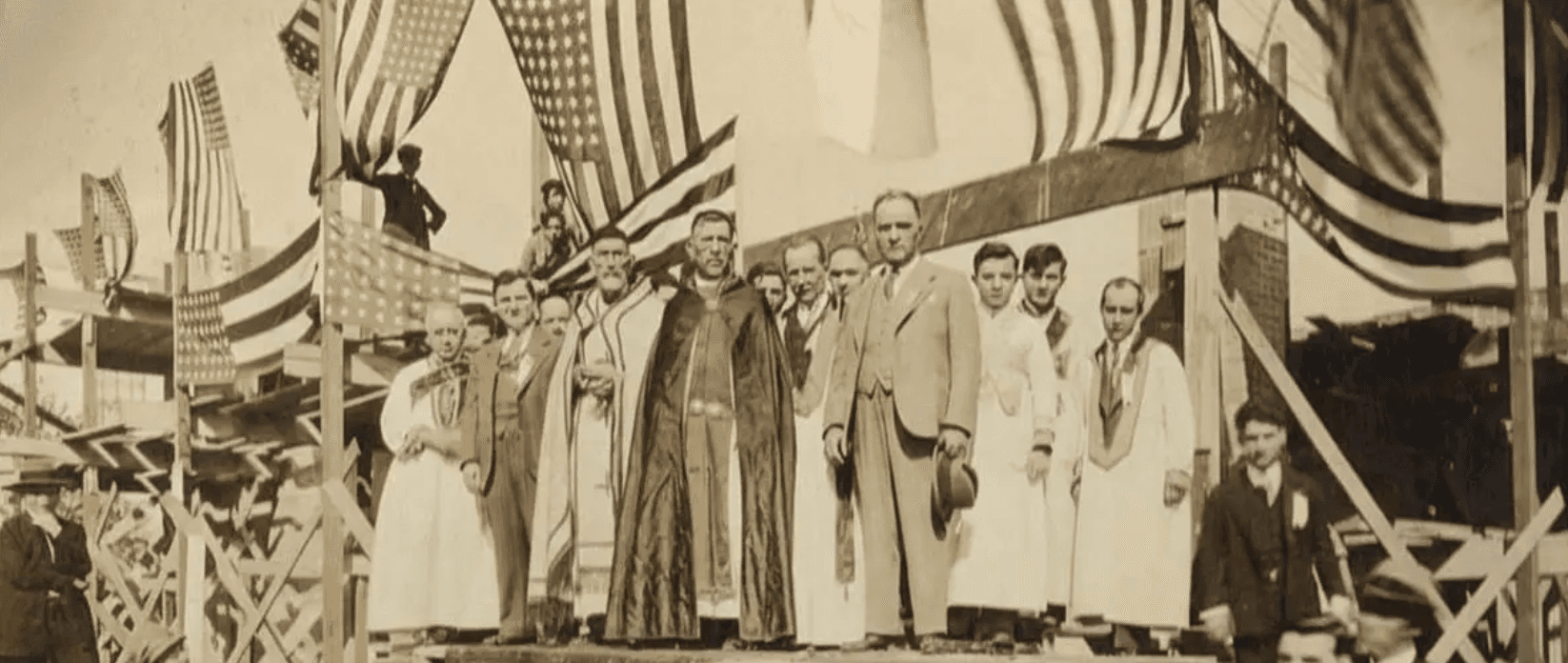
When Barsoum arrived at the newly built churches in Worcester and West New York to consecrate them, he proposed using "Syrian" rather than "Assyrian." The reaction of the congregations revealed just how deeply the misnomer had taken root. In Worcester, according to the recollection of Annie Papaz, the parish bluntly told the Archbishop: "NO, ASSYRIAN!" In West New York, the community went further: they reportedly threatened to withhold fundraising for the Sayfo refugees if the Archbishop did not use "Assyrian." This is a striking detail. Survivors and victims of the genocide were in desperate need of aid, yet portions of the North American community were prepared to let that aid dry up rather than accept the historically accurate name for their own people. The attachment to the misnomer had grown so strong that it could override even basic humanitarian solidarity with their own suffering brethren.
Patriarch Barsoum's Scholarly Intervention
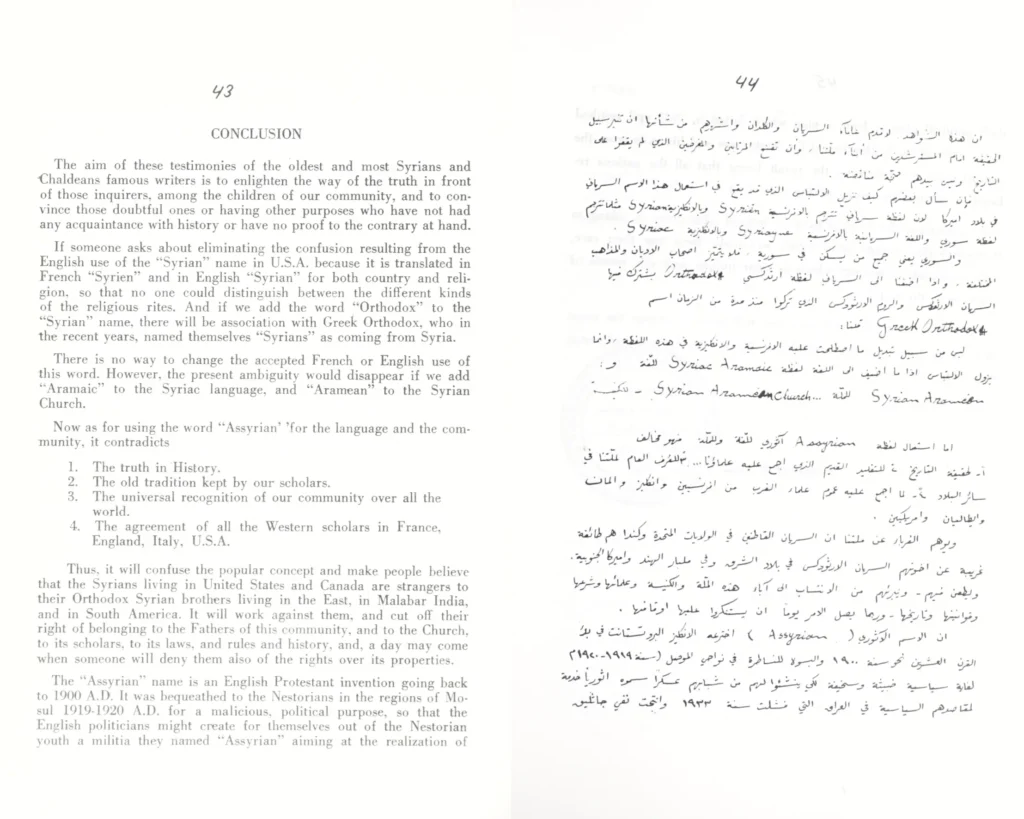
The definitive scholarly case came in late 1952, when Patriarch Mor Ignatius Aphrem I Barsoum (as he had by then become) authored a 22-page essay in Arabic titled On the Name of the Suryānī Nation. Archbishop Samuel published the text with a facing English translation, reproducing the Patriarch's own handwriting to underscore its authenticity and authority.
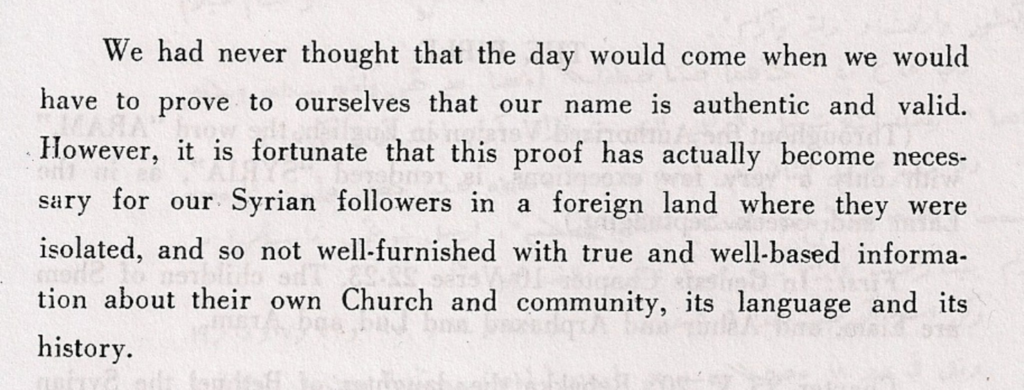
The Patriarch's argument was systematic and comprehensive. He began by expressing disbelief that the day had come when the community had to prove to itself that its own name was authentic, blaming the isolation of the diaspora for the lack of well-based information about their own church, language, and history. He then established that "the Syrian nation was known from its beginning as the Aramean nation," drawing on an extraordinary range of sources: citations from the Bible, from classical West Syriac (Syriac Orthodox) authors, from classical East Syriac (Church of the East) authors, and from modern European orientalists. All of these sources, without exception, supported the identification of the Suryānī people as Aramean.
In the essay's conclusion, Archbishop Barsoum addressed the practical question of English nomenclature. He proposed that "Syriac Aramaic" be used to denote the language, "Syrian Aramean" to denote the nation, and "Syrian Aramean Church" to denote the ecclesiastical institution. He then outlined four grounds on which the use of "Assyrian" was unjustifiable: it contradicted historical truth; it violated ancient tradition; it was inconsistent with the community's identity as understood in every other country; and it went against the consensus of Western scholars across French, English, German, Italian, and American academia.
This was not a casual opinion. It was the considered judgment of the highest spiritual and scholarly authority of the Syriac Orthodox Church in the twentieth century, backed by extensive documentation from across the entire Syriac literary tradition.
The Painful Confrontation of the 1950s
Armed with the Patriarch's essay, Archbishop Samuel moved to establish the North American Archdiocese under the name "Syrian," the term that the Patriarchate had always used.
When Mor Athanasius arrived in America in 1949, he found the "Assyrian" terminology already entrenched among the community. His early correspondence reflected this existing usage, including letterheads reading "Assyrian Archbishop of Jerusalem and Transjordan" and "Assyrian Orthodox Archdiocese of United States of America and Canada." By March 11, 1949, he was actively introducing himself using both terms. During this early period, Mor Athanasius used "Assyrian" to refer to his position and the church in the United States, but he used "Syrian" when referring to the church in the homeland. This was not an affirmation of Assyrian identity on his part, but simply an acknowledgment of the name the Church in America was already operating under.
His subsequent shift strictly to "Syrian" reflected his alignment with the Patriarch's position and a recognition that the English name needed to match the church's own scholarly and historical understanding of itself. This firm transition was not without friction. Some elderly members today recall Archbishop Barsoum in 1927 or Mor Athanasius in the 1950s explicitly challenging the congregation by stating, "You are not Assyrians," or declaring, "There are no Assyrians." If these direct challenges to their adopted identity did indeed occur, one can easily imagine the heated discussions and community debates that inevitably ensued.
The transition proved deeply painful. The parishes of West New York and Worcester, the two oldest in North America, refused to adopt "Syrian." These communities were rooted in the Kharput and Diyarbakir immigrant populations that had the strongest attachment to the "Assyrian" label, largely because of their historical contact with Armenians and the familiarity of the term Asouri.
The conflict quickly escalated beyond a disagreement over words. By the mid-1950s, the West New York parish had forbidden Mor Athanasius from entering the church building. The archbishop was forced to establish his own separate parish and began holding services at a house in Hackensack, New Jersey. Divisions tore through families, setting brother against sister and father against daughter.
The pro-Assyrian faction did not merely resist the change for their own parishes. According to multiple sources, they went considerably further, demanding that the entire Archdiocese, and indeed the Patriarchate itself, adopt "Assyrian" in place of "Syrian." Charles Manoog, a Worcester supporter of Mor Athanasius, reported to the Patriarch that members of the West New York and Worcester parishes insisted "that the diocese name and the name of our Patriarchate and our religion be changed to Assyrian instead of Syrian." Meeting minutes from Worcester record a call for the outright "elimination of the Syrian diocese." Records from another gathering show that some members were urging the community to refuse to recognize the Patriarch altogether if the designation "Syrian" was used.
When Patriarch Jacob III visited North America in 1960, the consequences of the rift were painfully visible. During his stay in Worcester, the Patriarch drove past the church but did not enter because of the ongoing conflict. Despite being the second largest parish in North America, Worcester received only a brief midweek visit with no formal liturgical function. The Patriarch stayed at the home of a supporter, where parishioners came privately to receive his blessing. The community's own Patriarch could not worship in their church.
The West New York parish attempted to break away entirely, seeking to place itself under the direct jurisdiction of the Holy See of Antioch rather than under Mor Athanasius. Patriarch Jacob refused to allow it and prepared legal documents in case a court battle became necessary. When one dissenting priest wrote to the Patriarch objecting to the appointment of Mor Athanasius, the Patriarch replied with the strongest terms, threatening excommunication. Eventually, both parishes were permitted to keep their existing names, but were required to join the Archdiocese. Worcester received a written assurance from the Patriarch in October 1960 that its name would not change. The feuds gradually subsided, but the scars remained.
The Parishes That Accepted the Correction
The parishes that accepted "Syrian" without resistance were, notably, those whose members came from regions where the "Assyrian" label had less resonance. Central Falls, Rhode Island, was populated by immigrants from Midyat in Tur Abdin. Detroit, Michigan, and Jacksonville, Florida, drew their members from Homs and surrounding villages in Syria. Sherbrooke, Canada, was mostly composed of families from Mardin. None of these communities had the heavy Armenian contact that had made Asouri a familiar term in Kharput and Diyarbakir.
The Fourth Homs Synod in 1954 formally supported the use of the "Syrian" name for all North American churches. The Fifth Homs Synod reiterated this decision. The Synod acknowledged that West New York and Worcester would retain their existing names "temporarily" until their boards could be persuaded to correct them. A 1957 Patriarchal encyclical attempted a middle path, addressing the congregations as "our Suryani Orthodox people," using the original term to sidestep both English translations.
New Immigrants, New Expressions of Aramean Identity
As new waves of immigrants arrived in the 1960s and 1970s, the naming question continued to evolve. In Los Angeles, a community composed of Syriac Orthodox from Palestine, Syrians from the villages around Homs, and immigrants from Mardin found itself debating names once again. The Syriac Orthodox from Palestine objected to "Syrian," which they associated with the nation-state of Syria, and preferred "Aramaic" as a more authentic designation. The Homs community, whose members were literally from Syria, naturally favored "Syrian." The Mardin group remained neutral. A compromise was reached in which the church signage read "Syrian Orthodox Church according to the Aramaic rite," preserving the Aramean linguistic identity alongside the established ecclesiastical name. It is telling that when given a fresh opportunity to choose, the newest arrivals reached for "Aramaic" rather than "Assyrian."
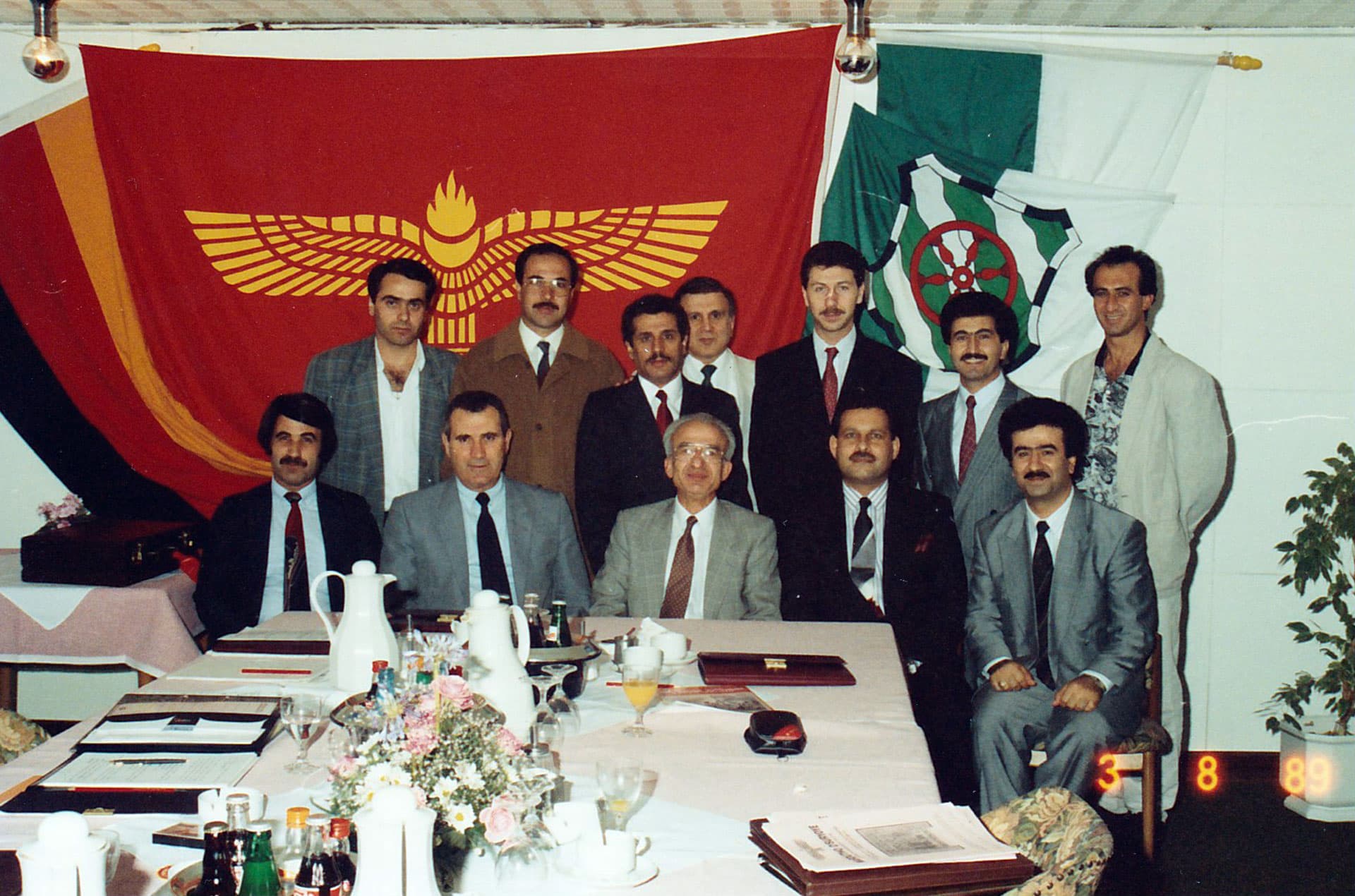
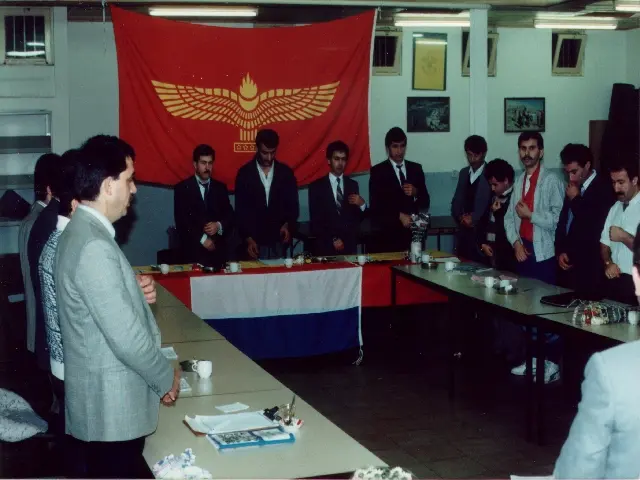
In 1974, newer immigrants in the New Jersey area established the Aramaic American Association. This organization represented a conscious and explicit affirmation of Aramean identity in the English-speaking diaspora. They published Aramaic Times, which remained in circulation from 1975 until at least 1983, and organized cultural activities centered on the Syriac language, music, and folklore. The Mor Ephrem School, established by the Association in February 1975, has taught Syriac language classes to children ever since and continues to operate at St. Mary's parish in Paramus. In 1983, the Aramaic American Association became a founding member of the Syriac Universal Alliance in New Jersey.
The parish of St. Mary in Paramus itself reflects the full arc of this naming history. Originally consecrated in West New York as the "Assyrian Apostolic Church of the Virgin Mary" in 1927, it is the only parish that still carries "Assyrian" in its title. Yet its newer organizations tell a different story: the Aramaic American Association (founded 1974) and the Suryani American Association (founded 1980) both chose names that reflected the community's actual heritage rather than the adopted English misnomer. Within the same parish, the old and new naming traditions exist side by side.
The "Syriac" Resolution
At the turn of the twenty-first century, the English-speaking dioceses of the Syriac Orthodox Church, particularly in the United States, petitioned the Holy Synod for permission to adopt "Syriac Orthodox" in place of "Syrian Orthodox." The Syriac Catholics and Maronites had already made this transition. The Synod approved, and "Syriac" became the standard for all newly established parishes.
This shift represented a practical resolution to decades of nomenclature disputes. "Syriac" was linguistically the closest English approximation to the original Suryoyo, avoided the political associations of "Syrian" (especially as the Syrian civil war made the term increasingly confusing), and carried none of the historical inaccuracy of "Assyrian." It was, in effect, a return to the community's own self-designation, expressed in the most neutral English form available.
Today, all three historical labels appear on church buildings, organization names, and community publications across North America. Parishes established before the 1950s carry "Assyrian." Parishes established in the 1950s and 1960s carry "Syrian." Parishes established after 2000 carry "Syriac." Each name is a fossil of its era, preserving the circumstances under which it was adopted.
Understanding the History
The naming history of the Syriac Orthodox in North America is best understood as the gradual correction of an English-language misnomer. The community's identity in its own languages was never in doubt. In Syriac, Arabic, and Turkish, the people called themselves Suryoyo or Suryānī, terms rooted in the Aramean heritage that Patriarch Barsoum so thoroughly documented. Writers like Naum Faik, even while using "Assyrian" in English, consistently invoked the Aramean identity in their Arabic and Syriac writings, calling their people "the Aramean race" and their homeland "Beth Nahrin," Mesopotamia. The newspaper Savto d-Oromoye bore the Aramean name proudly. The editorial pages of Ḥuyodo called for the unity of all Arameans from Lebanon to Persia. When Daniel Khoury Hanna mourned the Sayfo victims, he addressed his grief to "the daughter of Aram."
The adoption of "Assyrian" in English was driven by circumstantial factors: the phonetic similarity to Armenian Asouri, the unavailability of "Syrian" due to its prior association with Arabic-speaking communities, and the later rise of a romantic nationalism that drew on the prestige of the ancient Assyrian Empire. These factors, while historically understandable, produced a label that was at odds with the community's own literary, linguistic, and ecclesiastical tradition. The scholars and spiritual leaders of the church, from Archbishop Barsoum in 1927 to Patriarch Barsoum in 1952 to the Holy Synod at the turn of the millennium, consistently worked to align the English name with the historical and scholarly record.
The resistance to this correction was rooted not in historical evidence but in emotional attachment, generational habit, and a nationalism that prioritized political fantasy over the real needs of the suffering church. Patriarch Elias lamented in 1920 that money had been "spent on useless matters" while the post-Sayfo church crumbled. Congregations in 1927 threatened to withhold aid for genocide refugees rather than accept the correct name. In the 1950s, factions called for the "elimination" of the legitimately named diocese, refused to recognize their own Patriarch, and barred their archbishop from entering a church building. When Patriarch Jacob III visited in 1960, he could not set foot in the Worcester parish. These were not the actions of a community defending a well-founded historical claim. They were the reactions of people who had grown deeply attached to a convenient label and could not accept the scholarly evidence that it was wrong.
The story is ultimately one of a community finding its way back to its own name. The Aramean heritage of the Syriac Orthodox was never lost. It was always there in the liturgical language, in the classical literature, in the scholarly tradition, and in the words of the community's own writers and leaders. What changed over the course of a century was simply the English word used to express it. With the adoption of "Syriac," and with the flourishing of organizations like the Aramaic American Association and publications like Aramaic Times, the community has arrived at a place that, while not yet fully settled, at least no longer points in the wrong historical direction.